OVERVIEW
Precision Milling, Larger Setups
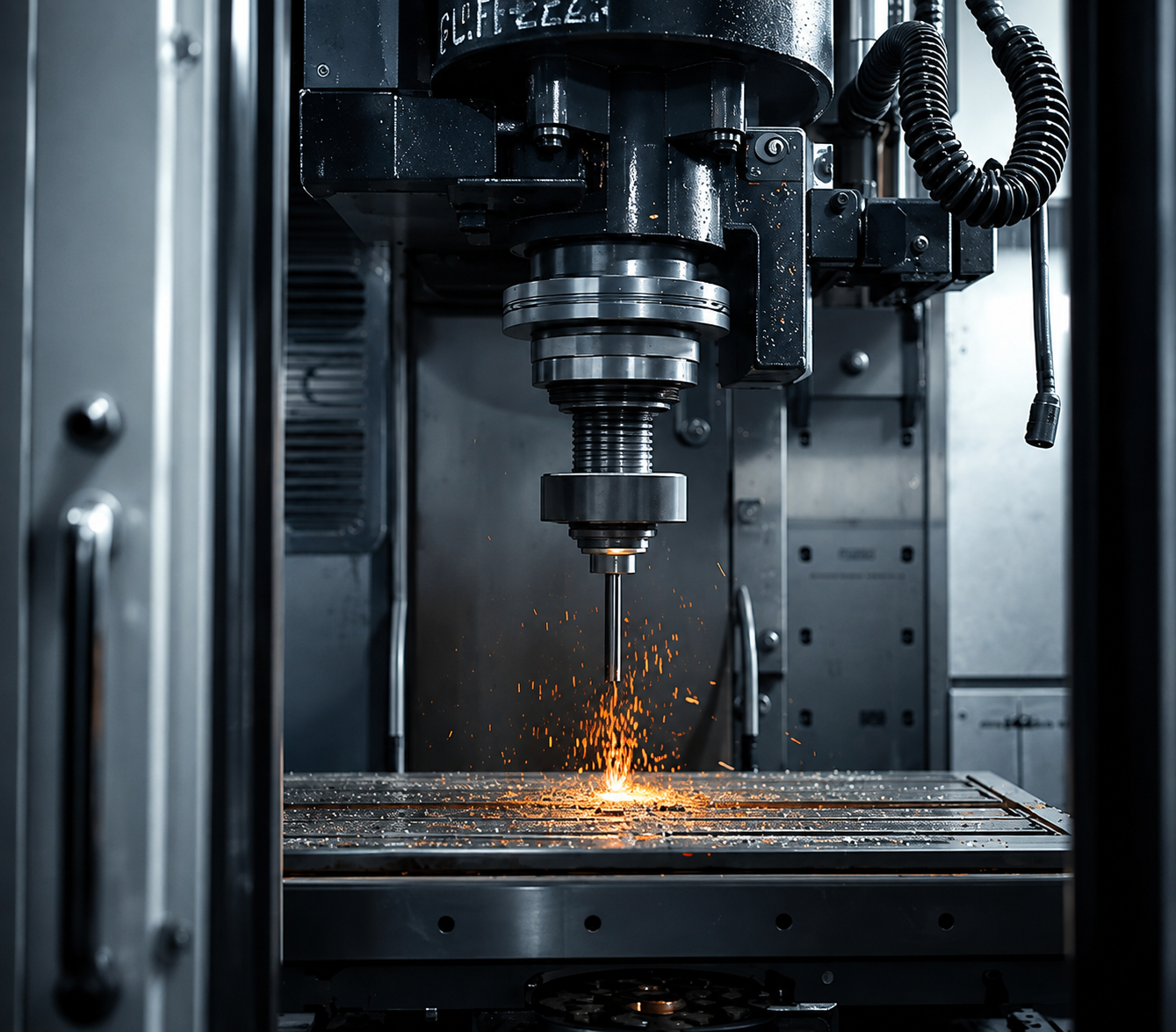
Once a part needs a fixture-based setup or a table size beyond what our turning centres handle, it moves to our vertical milling machines — built for larger components, flat surfaces, and batches that go beyond round-bar turning.
- Table Size : up to 1200 x 550 x 600 mm
- Machines on Floor : 2
- Configuration : Fixture-Based Milling
What Is Vertical Milling
Turning centres work by rotating the part against a fixed tool — which covers most round components, but breaks down once a job needs a flat face milled, a pocket cut, or a fixture holding multiple parts at once. Vertical milling machines flip that setup: the part stays fixed on the table while the tool moves across it, which is what makes them the right choice for larger, non-round work and production batches that need repeatable fixturing rather than one part at a time.
Our Vertical Milling Machines
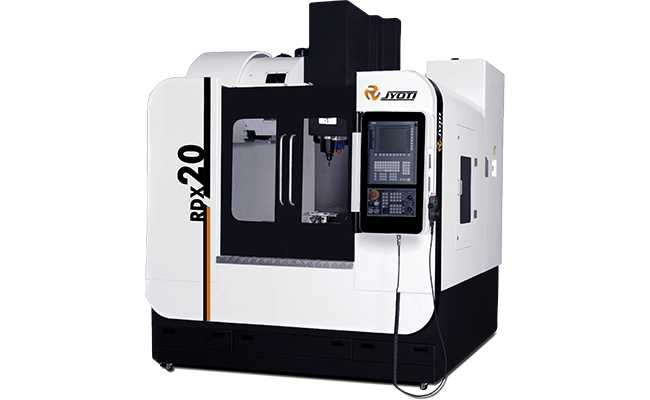
We run two vertical milling machines on our floor, covering a range of table sizes so a job isn't squeezed onto a table too small for it.
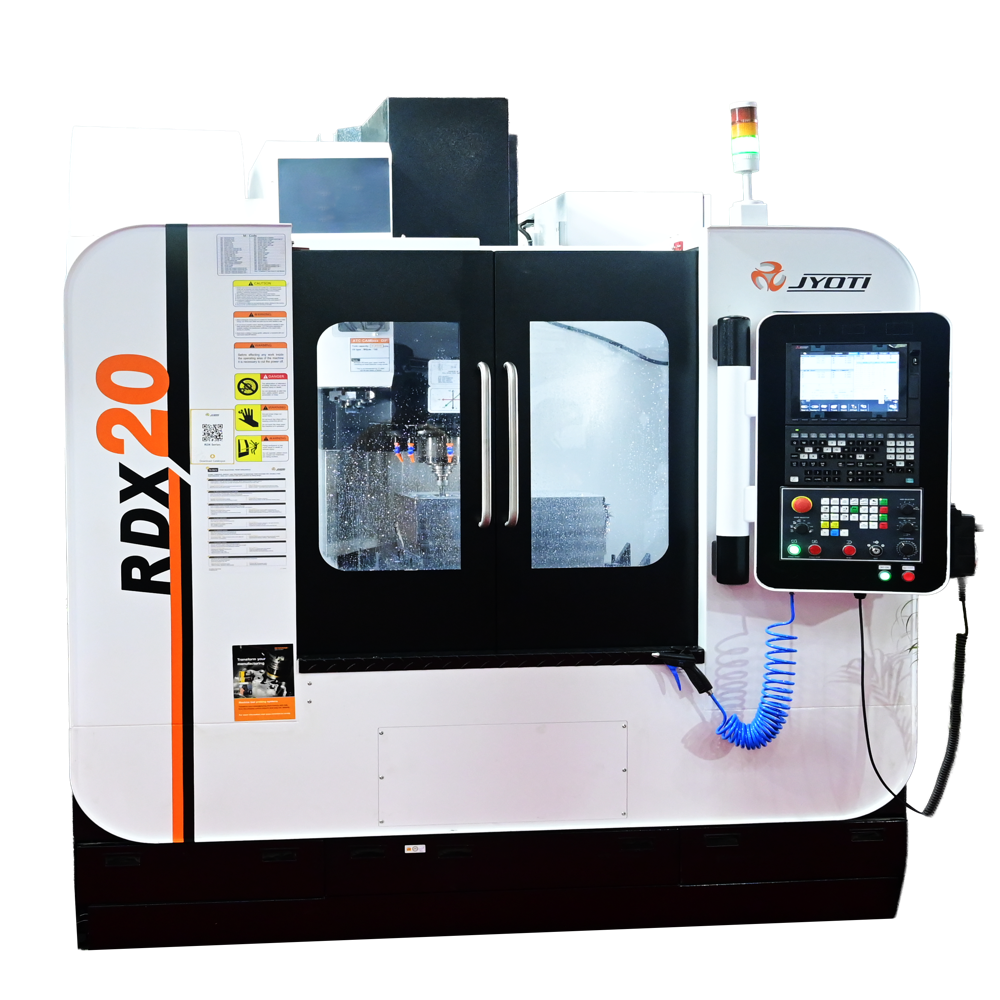
- Jyoti RDX 20 / RX 20 — 400 x 800 x 500 mm table size
- Jyoti RDX 30 — 1200 x 550 x 600 mm table size
Where These Machines Are Used
This is where fixture and housing components come off the floor — parts that need a flat, machined surface or multiple features cut across a larger footprint than a turning centre can hold. The larger RDX 30 table lets us run bigger batches in a single fixture setup, which keeps every part in the batch referenced off the same datum instead of repositioning between pieces.
Why It Matters for Your Order
A larger table only helps if the finished part still holds spec across the full batch — table size doesn't guarantee accuracy on its own. Every batch off our vertical milling machines goes through the same in-house measuring process as the rest of our shop before it ships.